Chemical Peels 101: Types, Benefits and What to Expect
If your skin has been looking dull, uneven, or rough no matter what you put on it, the problem may be less about what you’re applying and more about what isn’t being removed. Chemical peels in Windsor are one of the most effective professional skin renewal options available — and also one of the most misunderstood.
This guide covers everything you need to know: how peels work, what the different types do, which one suits your skin, and what to expect from the experience.
What Is a Chemical Peel?
A chemical peel is a professional skin resurfacing method that uses a carefully formulated acidic solution to loosen and shed the outermost layers of the skin. As those layers peel away over the following days, the skin beneath — fresher, smoother, and more evenly toned — becomes visible.
Depending on the depth of the peel and the acids used, a chemical peel can address a wide range of skin concerns including uneven texture, dullness, clogged pores, post-acne marks, fine lines, and sun-related pigmentation.
It’s worth knowing that the word “peel” doesn’t always mean dramatic peeling. Lighter peels may cause barely visible shedding, while stronger peels produce more noticeable flaking over several days. Both are doing the same thing — just at different depths.
Superficial vs Medium vs Deep Peels
Understanding peel depth is the foundation for understanding which option is right for you.
Superficial (Light) Peels
These peels work on the very outermost layer of skin (the epidermis) and are typically the gentlest option. They’re well-suited for regular use, clients new to peels, or anyone who wants noticeable skin improvement with minimal downtime.
Most clients experience mild redness or light flaking for 1–3 days, and can return to normal activities immediately. A series of superficial peels spaced 2–4 weeks apart is often recommended for cumulative improvement.
Best for: Dullness, mild uneven tone, superficial post-acne marks, oily or congested skin.
Medium-Depth Peels
These penetrate deeper into the epidermis and the upper portion of the dermis, making them more effective for stubborn pigmentation, more pronounced texture concerns, and moderate acne scarring. Downtime is typically 5–7 days, with more visible peeling and redness.
Best for: Uneven skin tone, hyperpigmentation, more visible pore congestion, early fine lines.
Deep Peels
The most intensive option, requiring significant preparation, downtime, and professional oversight. Deep peels reach into the dermis and address more advanced skin concerns. These are performed less frequently and are not appropriate for all skin types.
Best for: Significant sun damage, deeper lines, pronounced scarring — assessed and performed on a case-by-case basis.
For most clients considering a first peel, a superficial or medium-depth option is the appropriate starting point.
Types We Offer
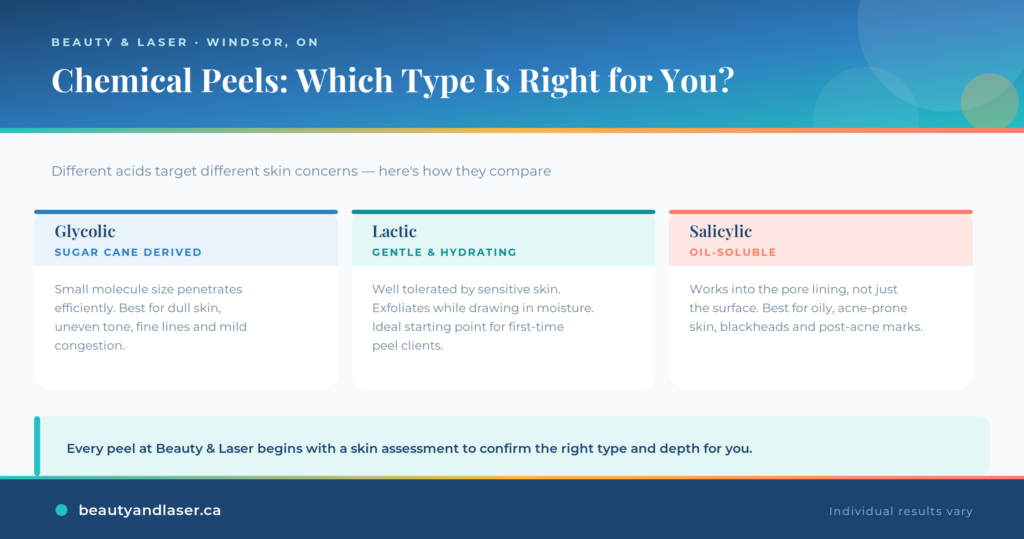
Different acids have different affinities for specific skin concerns. Here’s how the most common peel types compare.
Glycolic Acid Peel
Derived from sugar cane, glycolic acid is one of the most widely used peeling agents. Its small molecular size allows it to penetrate the skin efficiently, making it particularly effective for improving overall skin texture, reducing the appearance of fine lines, and brightening dull, uneven tone.
Glycolic peels are a popular choice for clients looking for visible, cumulative results from a regular professional skin renewal routine — without significant downtime.
Best for: Dull skin, uneven tone, fine lines, mildly congested skin.
Lactic Acid Peel
Lactic acid is a gentle exfoliating acid derived from milk, known for being both effective and well-tolerated by sensitive skin types. It works on the skin’s surface while also drawing moisture in, making it a good choice for clients whose skin tends toward dryness or sensitivity.
Lactic peels are often recommended as a starting point for clients who are new to chemical peels or who have found other acids too irritating.
Best for: Sensitive or dry skin, mild texture irregularities, a hydration boost alongside exfoliation.
Salicylic Acid Peel
Unlike glycolic and lactic acids, salicylic acid is oil-soluble — meaning it can work its way into the pore lining rather than just the skin’s surface. This makes it the most targeted option for oily, acne-prone, and congested skin.
Salicylic peels are commonly used for clients dealing with breakouts, blackheads, enlarged-appearing pores, and the post-acne marks left behind after blemishes resolve.
Best for: Oily and acne-prone skin, blackheads, congested pores, post-acne pigmentation.
Which Peel Is Right for You?
Choosing the right peel comes down to matching the acid type and depth to your specific skin concerns and skin type. Here’s a general guide:
| Skin Concern | Suggested Peel Type |
|---|---|
| Dullness / general renewal | Glycolic (superficial) |
| Dry or sensitive skin | Lactic acid |
| Oily / acne-prone skin | Salicylic acid |
| Post-acne marks | Salicylic or glycolic |
| Uneven pigmentation | Glycolic or medium-depth peel |
| Fine lines / early texture concerns | Glycolic (medium) |
| Combination concerns | Custom blended peel, assessed at consultation |
At Beauty & Laser, every peel is preceded by a skin assessment to confirm the most appropriate option for your skin — not a one-type-fits-all approach.
Aftercare
How you care for your skin after a peel is just as important as the peel itself.
Immediately after: Skin may feel tight, warm, or mildly sensitive. Redness typically settles within a few hours for lighter peels.
Days 1–3: Avoid harsh skincare products, exfoliants, retinoids, or scrubs. Stick to a gentle cleanser and a simple, hydrating moisturizer.
Throughout the peeling phase: Let the skin shed naturally. Picking or peeling manually can cause irritation or uneven results.
Sun protection is non-negotiable: Freshly exfoliated skin is more photosensitive. Apply SPF 30–50 daily and limit direct sun exposure for at least two weeks after your peel.
Avoid heat: Skip saunas, steam rooms, and intense exercise for 24–48 hours post-treatment.
Results
With lighter peels, most clients notice improved brightness and smoother texture within a few days of the initial peeling phase resolving. A single peel can produce visible improvement — and results typically build across a series of sessions, with cumulative improvement in tone, texture, and clarity over time.
For more stubborn concerns like post-acne pigmentation or uneven tone, combining chemical peels with complementary treatments such as Morpheus8 RF microneedling can help address multiple layers of concern more effectively than either treatment alone. You can also explore how Morpheus8 compares to other skin-lifting options in our guide on Morpheus8 vs traditional facelift.
Frequently Asked Questions
Do chemical peels hurt?
Light peels typically produce a mild tingling or warming sensation during application — most clients find it very manageable. Medium-depth peels may be more intense during application but are brief.
How often can I get a chemical peel?
Superficial peels can generally be repeated every 2–4 weeks. Medium-depth peels require more time between sessions — typically 4–6 weeks or more — to allow the skin to fully recover and rebuild.
Can I wear makeup after a chemical peel?
For lighter peels, most clients can apply makeup after 24 hours. For medium-depth peels, it’s best to avoid makeup during the active peeling phase to reduce irritation risk.
Are chemical peels safe for darker skin tones?
Lighter peels using lactic or salicylic acid are generally well-tolerated across skin tones. Medium and deep peels require more caution for clients with darker complexions, as they carry a higher risk of post-inflammatory pigmentation changes. A thorough consultation is essential to confirm the right approach.
Can I combine a chemical peel with other treatments?
Yes — peels are often combined with microneedling or RF treatments for enhanced results. However, it’s important that treatments are properly spaced and sequenced; your provider will guide you on what can be combined safely and how much time to leave between appointments.
How many sessions will I need?
For general skin renewal, a series of 4–6 superficial peels spaced 2–4 weeks apart is a common starting plan. For more targeted concerns, your provider will recommend a tailored sequence based on your specific goals.
Ready to Resurface?
A chemical peel is one of the most straightforward ways to meaningfully improve skin texture, clarity, and tone — with minimal recovery time and results that compound over a series of sessions.
Book Your Chemical Peel
Not sure which peel is right for your skin? Our team will assess your skin type and concerns and recommend the most appropriate option for your goals.
👉 Book your consultation or explore our full range of skin treatments.