
How to Prepare for Your Laser Hair Removal Appointment
The difference between an average laser hair removal session and a great one often comes down to what you did in the days and weeks beforehand. Skip the prep, and you risk discomfort, reduced effectiveness, or even having to reschedule. Follow it properly, and your session goes smoothly with the best possible results.
Here’s exactly how to prepare for laser hair removal, broken down by timeline so you know exactly what to do and when.
4 Weeks Before
This is where the real groundwork happens — and it’s the step most people overlook.
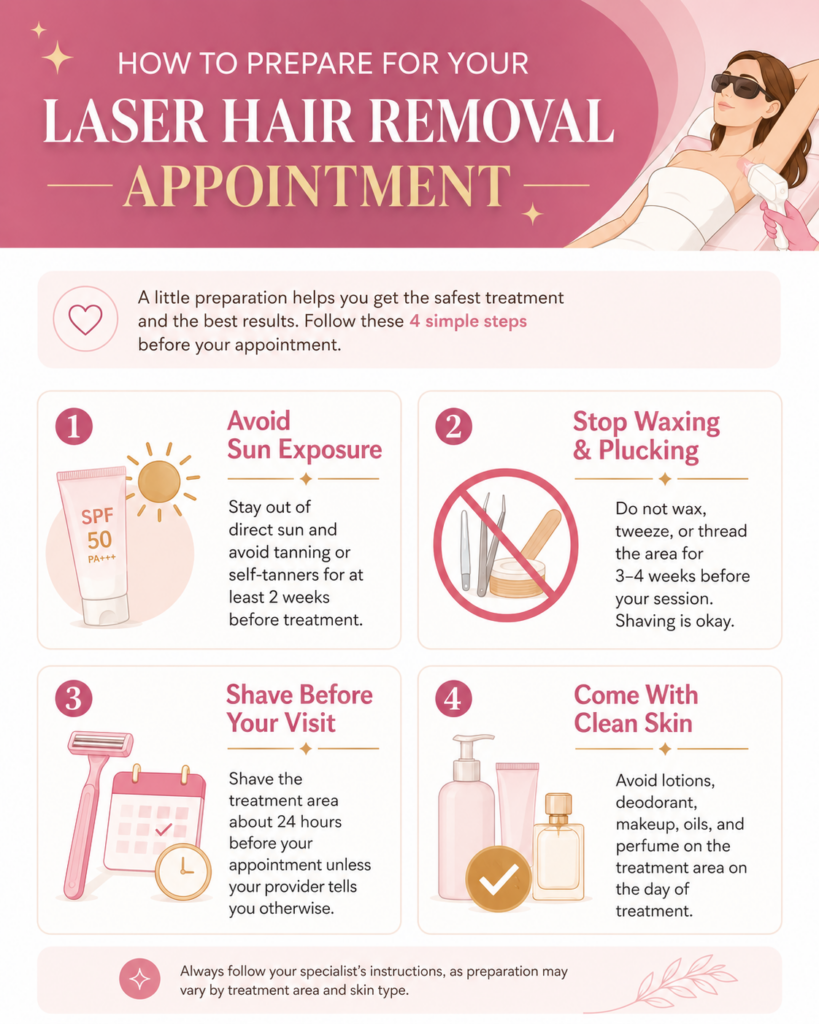
Stop waxing, sugaring, plucking, or using epilators on the treatment area. Laser hair removal works by targeting the hair follicle beneath the skin, so the follicle needs to be intact. Any method that pulls hair out by the root removes the very target the laser needs.
Avoid tanning beds entirely, and start being more mindful of sun exposure on the treatment area. Tanned skin increases the risk of irritation and reduces how precisely the laser can target hair pigment versus skin pigment.
If you’re planning ahead for a specific event or season, this is also the point to think about timing more broadly — we cover this in our guide on the best time of year to start laser hair removal.
1 Week Before
Continue avoiding sun exposure and tanning on the treatment area — this matters right up until your appointment, not just weeks in advance.
Skip harsh skincare products in the days leading up to your session. Avoid scrubs, exfoliating acids, retinoids, and alcohol-based products on the treatment area for at least 3–4 days before your appointment to prevent irritation or sensitivity during treatment.
Note any new medications. Certain medications — including some antibiotics, retinoid-based products, and certain antidepressants — can increase photosensitivity. If you’ve started anything new, mention it before your session so your technician can confirm it’s safe to proceed.
24–48 Hours Before
Shave the treatment area carefully. This is one of the most important steps. Shaving (not waxing) removes the visible hair above the skin while leaving the follicle intact below the surface — exactly what the laser needs to work effectively. Use a clean razor and avoid nicking or irritating the skin.
Avoid aggressive exfoliation in this final window, even if you’d normally exfoliate regularly. Let your skin be as calm and undisturbed as possible heading into your appointment.
Day of Your Appointment
Skip lotions, deodorants, perfumes, and makeup on the treatment area. These products can interfere with the laser’s effectiveness and, in some cases, increase the risk of an adverse skin reaction.
Wear loose, comfortable clothing that allows easy access to the treatment area and won’t rub uncomfortably against your skin afterward.
Arrive with clean, dry skin. If you’ve showered earlier in the day, that’s fine — just avoid applying anything to the area afterward.
What to Avoid
A quick reference for what NOT to do throughout your entire treatment plan, not just before a single session:
Don’t wax, sugar, pluck, thread, or epilate any area currently being treated with laser — at any point during your full course of sessions.
Don’t use tanning beds, and limit direct sun exposure on treatment areas as much as possible. If sun exposure is unavoidable, use SPF 30–50 consistently.
Don’t apply numbing cream before your session. It isn’t used for this treatment, since the sensation occurs at the hair follicle itself — beneath where a topical product can reach — and occlusive creams on the skin can actually interfere with the laser.
Don’t book a session if you currently have a tan, sunburn, or active skin irritation in the treatment area. Reschedule instead — your technician would rather wait than risk an uneven or uncomfortable result.
Aftercare After the Session
Good prep gets you to the chair — good aftercare protects your results once you leave it.
Avoid heat for the first 24 hours. Skip hot baths, saunas, steam rooms, and intense exercise that causes sweating in the treated area.
Don’t shave the treatment area for 14 days after your session. This is a firm guideline — the treated follicles need time to fully respond before you reintroduce a razor to the skin.
Protect the area from sun exposure for at least two weeks, using SPF 30–50 on any areas that will be exposed.
Skip scrubs and harsh skincare on the treated area for 3–5 days to avoid unnecessary irritation while the skin settles.
Stay hydrated. Drinking enough water genuinely helps your skin recover faster and reduces dryness or irritation post-treatment.
Mild redness or warmth immediately after your session is completely normal and usually fades within a few hours. If anything feels unusual beyond that, reach out to your clinic for guidance.
Frequently Asked Questions
What happens if I forget to shave before my appointment?
Most clinics can shave the area for you if needed, but it’s best to come prepared — arriving already shaved means more of your appointment time goes toward the treatment itself.
Can I exercise before my laser hair removal session?
Light activity is generally fine, but avoid intense exercise right before your appointment if it will leave you sweaty, as this can affect comfort during treatment.
I have a tan right now — can I still get treated?
It’s best to wait until the tan fades. Treating tanned skin increases the risk of irritation and reduces the precision of the laser. Your technician may ask to reschedule if your skin shows visible tanning.
Is it okay to shower right before my appointment?
Yes — just make sure you haven’t applied lotion, deodorant, or other products to the treatment area afterward.
How soon before my appointment should I stop waxing?
Stop waxing or any root-removal method at least 4 weeks before your first session, and avoid it for the entire duration of your treatment plan.
Why can’t I shave for 14 days after a session?
The treated follicles are still responding to the laser during this window. Shaving too soon doesn’t damage results, but waiting the full 14 days is the standard protocol for this treatment to let the process complete properly.
A Little Prep Goes a Long Way
None of these steps are complicated, but together they make a real difference in how comfortable your session is and how effective your results turn out to be. A little planning now means a smoother appointment and better outcomes down the line.
Book Your Session Today
Have a question about your specific treatment area or skin type before booking? Our team is happy to walk you through exactly what to expect.
👉 Book your session today or check our current pricing before you go.